CNC machining remains a practical foundation of modern manufacturing, from aerospace brackets to medical housings and automotive components. But why is CNC machining widely used in manufacturing? The answer combines accuracy, repeatability, flexibility, automation, and measurable production control. A digital program can guide a cutting tool across aluminum, steel, titanium, plastics, and other engineered materials. It can also reproduce the same intricate feature thousands of times, with limited variation between parts.
Industry data supports this continued adoption. Grand View Research estimates that the global CNC machine market reached approximately USD 88 billion in 2023. Its report also projects strong growth through 2030, although market estimates differ between research firms. Deloitte’s 2024 Smart Manufacturing and Operations Survey found that 86% of manufacturing leaders expect smart manufacturing to become a major competitiveness driver within three years. CNC equipment fits this shift because it connects design data, machine settings, inspection results, and production records.
Still, CNC is not a magic button. Poor workholding, incorrect feeds, worn tools, or weak process planning can quickly create scrap. That practical weakness deserves attention. The following seven tips examine why manufacturers continue choosing CNC machining: tight tolerances, repeatable quality, faster production, design freedom, material versatility, lower waste, and scalable automation. Together, these advantages explain CNC’s role in modern factories, while reminding engineers that reliable results depend on skilled setup, verified programs, and disciplined inspection.
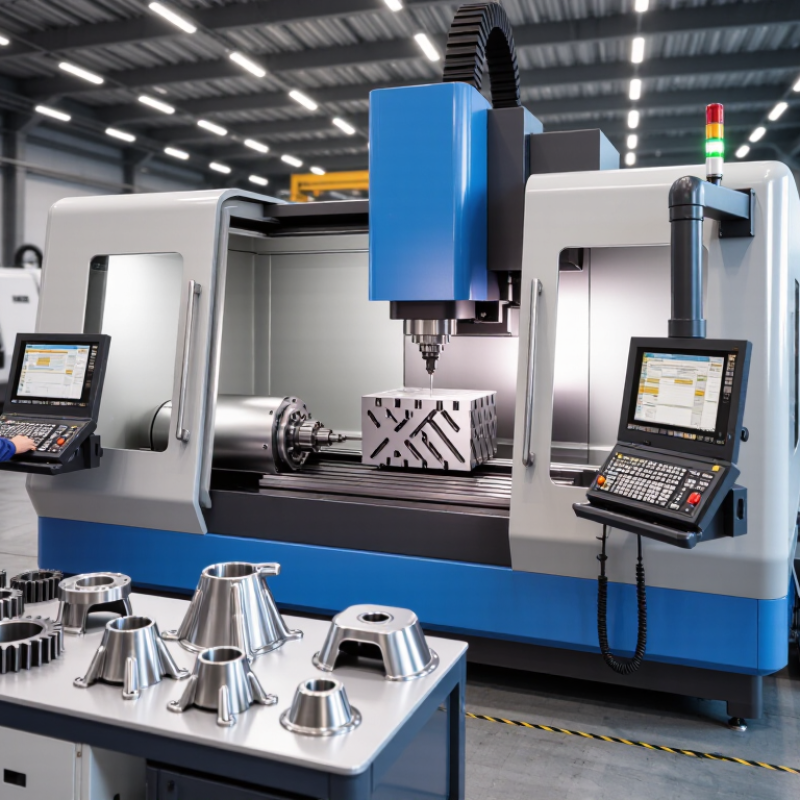
CNC machining uses computer-controlled equipment to remove material from a solid workpiece. CNC means Computer Numerical Control. A machinist first creates a digital model, then converts it into toolpaths through manufacturing software. These instructions guide cutting tools along precise X, Y, and Z movements.
The machine reads coded commands and controls spindle speed, feed rate, cutting depth, and tool changes. Setup comes first. The operator secures the material, installs suitable tools, and sets the work coordinate system. Sensors and measuring instruments help verify tool position and finished dimensions. In practical shop work, aluminum, steel, plastics, and other materials each require different cutting conditions.
Small errors matter. A loose fixture can create vibration, poor surface finish, or inaccurate holes. Even a correct program may fail when the tool is worn or the material shifts. I have seen production delays caused by one overlooked offset. That is why experienced operators inspect the first part before repeating the cycle. CNC machining offers repeatable results, but it is not fully automatic in the human sense. Good outcomes depend on accurate drawings, sensible toolpaths, machine maintenance, and careful quality checks. Sometimes, a slower cut produces a better part.
CNC machining is widely used because it turns digital designs into consistent physical parts. Its precision begins with controlled coordinates, stable cutting speeds, and repeatable toolpaths. Operators can reproduce the same hole pattern across hundreds of components. That repeatability matters.
Precision is not automatic. In practical shop-floor work, rigid fixturing prevents vibration from shifting a part. Tool-wear monitoring helps maintain edge quality during long production runs. Coolant control can reduce thermal expansion. In-process probes also detect offsets before they create a costly batch error. A small setup mistake can still ruin excellent programming. This is where experience matters.
Deloitte’s 2024 Smart Manufacturing and Operations Survey found that 86% of manufacturers consider smart manufacturing important to future success. The figure is revealing. CNC systems support this shift through digital records, automatic compensation, and measurable process data. Fortune Business Insights’ 2024 CNC Machine Market report estimated the global market at about 83.99 billion dollars in 2023. Yet tighter tolerances do not always mean better parts. Material stress, inaccurate drawings, and neglected calibration can undermine precision. A thoughtful machinist checks the machine, fixture, tool, and measurement method before trusting the final dimension.
The chart shows the maximum permissible linear dimensional deviation defined by ISO 2768-1 for nominal dimensions from 30 mm to 120 mm. Lower deviation values indicate tighter manufacturing precision.
Reference: ISO 2768-1:1989, general tolerances for linear dimensions. Actual CNC capability depends on the machine, material, tool condition, part geometry, programming, thermal control, and inspection method.
Computer-controlled movements help produce consistent dimensions across production batches.
Digital programs reduce manual adjustment and operator-dependent machining errors.
Multi-axis CNC machines can manufacture contours, pockets, holes, and compound surfaces.
Stored programs support repeatable setups when the same design is produced later.
A revised digital model or toolpath can be used without creating a new dedicated mold.
Controlled cutting parameters help manufacturers manage surface finish and dimensional quality.
Probing and coordinate-measuring processes can verify dimensions during or after machining.
Why CNC Systems Increase Production Efficiency
CNC systems raise production efficiency by turning digital designs into repeatable machine movements. Operators can store toolpaths, offsets, and cutting parameters for future batches. This reduces manual measurement and limits variation between parts. Deloitte’s 2023 Smart Manufacturing and Operations Survey found that 86% of manufacturers expect smart manufacturing to strengthen competitiveness within five years. That expectation reflects factory-floor pressure, not just technology enthusiasm.
Speed matters, but consistency matters more. A CNC machine can run several operations with fewer manual repositioning steps. Automated probing can check workpiece location before cutting begins. Production data can also reveal tool wear, idle time, and recurring setup delays. The National Institute of Standards and Technology reports that manufacturers can lose significant capacity through unplanned downtime and inefficient processes. Better machine monitoring helps expose those hidden losses. Small gains become meaningful across hundreds of parts.
Still, CNC is not a magic shortcut. A poor toolpath can increase cycle time, heat, and scrap. Incorrect feeds may damage expensive tooling. Human judgment remains essential during fixture design and process validation. I have seen efficient-looking programs fail because they ignored chip evacuation or access angles. That gap deserves attention. Production teams should compare actual cycle times with programmed estimates, then revise the process using measured evidence. Efficiency improves through disciplined feedback, not automation alone.
Typical technical and operational characteristics of CNC machining. Actual results vary according to machine type, material, tooling, programming, and process control.
| Tip | CNC Capability | Typical Data or Range | Production Efficiency Benefit | Why It Matters in Manufacturing |
|---|---|---|---|---|
| 1High Repeatability | Computer-controlled tool motion follows programmed coordinates and cutting parameters. | Typical machine repeatability is approximately ±0.005 to ±0.020 mm, depending on machine class, thermal conditions, workholding, and maintenance. | Reduces dimensional variation and rework. | Consistent parts are easier to assemble, inspect, and replace across multiple production batches. |
| 2Faster Setup and Changeover | Programs, tool offsets, fixtures, and inspection routines can be stored and recalled digitally. | Digitally standardized setups can reduce changeover effort by approximately 20%–50% compared with fully manual methods, depending on process maturity. | Shortens non-cutting time between jobs. | Manufacturers can switch between part numbers more quickly and support smaller production batches. |
| 3High Cutting Speed and Feed Control | Feed rate, spindle speed, toolpath, and cutting depth are controlled with repeatable accuracy. | Optimized CNC toolpaths commonly deliver 10%–30% shorter cycle times than unoptimized cutting strategies under comparable conditions. | Produces more parts per machine hour. | Stable cutting parameters improve material removal rates while helping control tool wear and surface quality. |
| 4Complex Multi-Axis Machining | Three-axis, four-axis, and five-axis systems can machine multiple surfaces in one coordinated process. | Using additional axes can reduce operations and repositioning steps by approximately 25%–60% for suitable complex components. | Reduces setups, alignment errors, and handling time. | Fewer setups are especially valuable for aerospace, medical, mold, and precision engineering components. |
| 5Reliable Unattended Operation | Automatic tool changers, probing systems, coolant control, and safety monitoring support extended production runs. | Suitable processes may operate for 8–24 hours with limited operator intervention when tooling, workholding, and monitoring are properly validated. | Increases machine utilization beyond staffed working hours. | Longer operating windows improve asset utilization and help meet demand without adding the same number of machines. |
| 6Digital Program Reuse | CAD/CAM data and CNC programs can be edited, simulated, documented, and reused for repeat orders. | Digital process records preserve tool lists, offsets, cutting parameters, inspection points, and revision history for each part. | Reduces engineering duplication and programming errors. | Standardized digital workflows make production more scalable and simplify the transfer of work between qualified machines. |
| 7Flexible Production Volume | The same CNC platform can produce prototypes, replacement parts, low-volume batches, and high-volume repeat components. | CNC machining is commonly used for quantities ranging from one prototype to thousands of parts, with automation added as volume increases. | Supports both customized and repeat production. | Manufacturers can respond to changing product designs and demand without creating a dedicated hard-tooling process for every part. |
CNC Machining Supports Complex and Custom Designs
CNC machining converts digital models into controlled cutting movements. This makes complex curves, deep pockets, and thin walls more manageable. A machinist can adjust toolpaths for one prototype or several hundred parts. The same program also preserves repeatability between production batches. That matters when a custom housing must fit sensors, seals, and fasteners precisely.
The International Federation of Robotics reported 541,302 industrial robot installations worldwide in 2023. This figure reflects manufacturing’s growing reliance on programmable automation. CNC machining fits that direction because digital files support quick design changes and coordinated production. Engineers can test aluminum brackets, revise hole positions, and produce another version without rebuilding hard tooling. Short setup cycles help control costs for low-volume custom work.
Material behavior still causes trouble. Cutting heat can distort thin sections, while vibration may leave visible marks inside a pocket. Perfect software does not remove imperfect judgment. Experienced machinists inspect tolerances, tool wear, surface finish, and part alignment during production. A 2024 manufacturing outlook from the United Nations Industrial Development Organization also emphasizes digitalization and flexible production as important industrial trends. Yet custom machining needs more than automation. Clear drawings, realistic tolerances, and careful inspection often decide whether a complicated design works in the real assembly.
CNC machining benefits industries that demand repeatable accuracy, complex geometry, and dependable production schedules. Aerospace manufacturers use it for lightweight brackets, turbine components, and structural fittings. These parts often require tight tolerances and documented inspection. Automotive production also relies on CNC equipment for engine housings, transmission parts, battery enclosures, and precision fixtures. The International Energy Agency reported nearly 14 million electric cars were sold worldwide in 2023. That growth increases demand for accurately machined components.
Medical manufacturing gains similar advantages. CNC machines produce surgical instruments, orthopedic components, and custom prosthetic parts from metals and engineering plastics. Small dimensional errors can affect fit, movement, or sterilization performance. Electronics manufacturers use CNC machining for heat sinks, sensor housings, and testing fixtures. The International Federation of Robotics recorded 541,302 industrial robot installations globally in 2023. This figure reflects wider factory automation, where CNC machines often connect with robotic loading and inspection.
Energy equipment makers also benefit from machining large valves, pump bodies, and renewable-energy components. Deloitte’s 2024 Smart Manufacturing and Operations Survey found that 86% of manufacturers considered smart manufacturing important for competitiveness. Still, CNC is not a universal answer. High tooling costs, programming time, and material waste can limit smaller production runs. A recurring mistake is choosing automation before studying part volume and tolerance requirements. Careful process planning matters more than impressive machinery.
It converts digital models into controlled cutting movements. Complex curves, deep pockets, and thin walls become more manageable.
Yes. The same program can support one prototype or hundreds of parts. This helps preserve consistency between batches.
Engineers can revise hole positions, wall thicknesses, or mounting features digitally. A new version can follow without rebuilding hard tooling.
Aerospace, automotive, medical, electronics, and energy industries use it widely. They need accurate parts with repeatable dimensions.
Common examples include aluminum brackets, sensor housings, pump bodies, heat sinks, and engineering-plastic components. Material behavior still matters.
Cutting heat may distort thin sections. Vibration can leave visible marks inside pockets. Tool wear can also affect dimensions.
Clear drawings define critical dimensions, surfaces, and assembly requirements. Unrealistic tolerances may increase cost without improving performance.
Not always. Programming time, setup work, tooling costs, and material waste can limit small batches. Sometimes, simpler methods fit better.
Machinists inspect tolerances, tool wear, surface finish, and alignment. Careful inspection catches problems before final assembly.
No. Automation improves repeatability, but experienced judgment remains necessary. Perfect software does not remove imperfect decisions.
CNC machining is a computer-controlled manufacturing process that converts digital designs into precise physical parts by directing cutting tools, drills, or other equipment. This method improves manufacturing precision by reducing manual errors, maintaining consistent dimensions, and producing reliable results across repeated production runs. It also increases efficiency through automated operations, faster setup changes, reduced material waste, and continuous production with limited supervision.
Another important advantage is its ability to support complex, customized designs that would be difficult or impossible to create through conventional methods. Manufacturers can produce detailed shapes, tight tolerances, and prototypes while adapting quickly to design changes. These benefits explain why is CNC machining widely used in manufacturing across industries such as aerospace, automotive, medical equipment, electronics, and industrial machinery. Overall, CNC machining combines accuracy, flexibility, productivity, and repeatability, making it a practical solution for both small-batch development and large-scale production.

Nuplanta CNC