Top 10 Ways to Reduce Machining Errors in Production?

Time:2026-05-09 Author:Mason
0%

In today's manufacturing landscape, understanding how to reduce machining errors in production is crucial. Precision is key in machining processes. Even small errors can lead to significant financial losses and delays. Industry experts emphasize that a proactive approach can enhance efficiency.

The journey to minimize errors begins with adopting proper techniques. Regular maintenance of machinery ensures optimal performance. Training staff on best practices can also lead to fewer mistakes. Many facilities overlook the importance of creating a well-structured work environment. Disorganization can lead to confusion and errors, ultimately impacting production quality. Encouraging a culture of continuous improvement is essential.

Yet, it is important to embrace the fact that not all errors can be eliminated completely. Some variability is inherent in machining. Reflecting on mistakes can reveal valuable lessons that drive improvement. By implementing the right strategies and embracing a mindset of learning, companies can significantly enhance their production process.
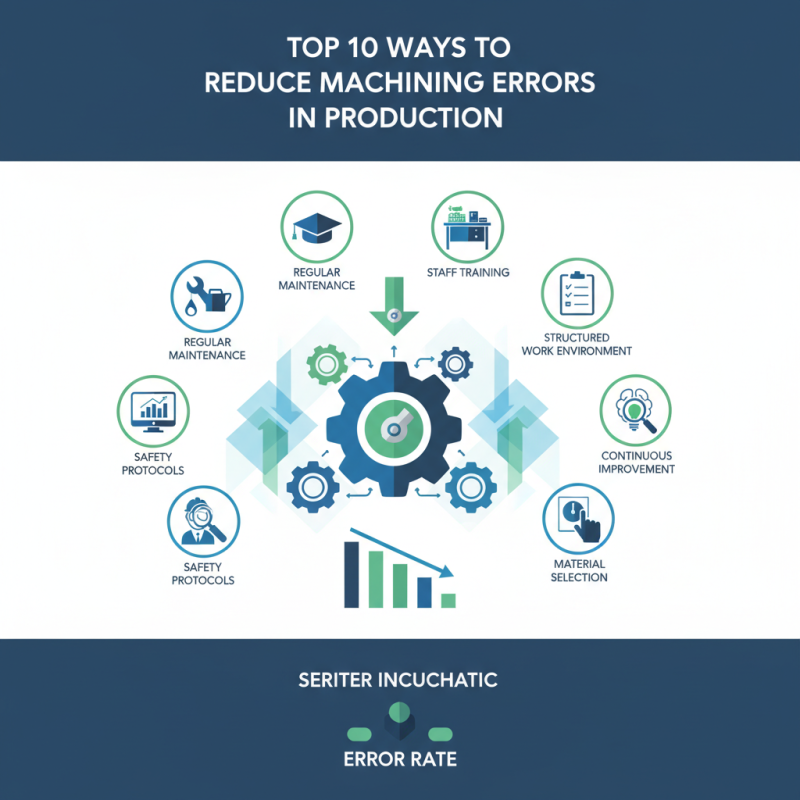
Top 10 Ways to Reduce Machining Errors in Production?

Understanding Machining Errors: Types and Causes in Production Processes

Machining errors can significantly impact product quality in manufacturing. Understanding the types of machining errors is essential for improving accuracy. Common errors include dimensional inaccuracies, surface finish defects, and tool wear. Dimensional inaccuracies occur when parts do not meet specified tolerances. This can lead to fitting issues. Surface finish defects diminish the aesthetic and functional qualities of a product. Tool wear directly influences the precision of the machining process.

The causes of these errors are numerous. Improper tool selection or setup can lead to inconsistency. Environmental factors like temperature and humidity also play a crucial role. Vibrations in the machinery can affect stability, causing slight deviations over time. Even the operator's skill level contributes to how well the machining process adheres to precise specifications.

Reflection is vital for improvement. Regularly analyzing mistakes helps identify patterns that lead to errors. Documenting these instances can guide future training and equipment investment. Emphasizing a culture of learning from errors promotes long-term efficiency and quality in production processes.

Implementing Precision Measurement Techniques to Minimize Errors

Precision in machining is crucial for optimizing production and minimizing errors. Implementing precision measurement techniques can dramatically enhance the accuracy of machining processes. According to industry reports, nearly 30% of machining errors stem directly from improper measurement practices. Utilizing advanced tools like laser interferometers and coordinate measuring machines (CMM) ensures components meet strict tolerances. These tools can detect discrepancies as small as 2 microns, leading to significant reductions in scrap rates and rework costs.


Tip: Regular calibration of measuring instruments is vital. Even minor drift can lead to substantial errors in machining. A study revealed that companies that implement routine calibration see a 20% decrease in errors. Training employees on these techniques can boost their confidence and improve overall production quality.


Additionally, integrating digital measurement technologies can streamline the manufacturing process. For instance, using smart sensors connected to data analytics can provide real-time feedback. Reports indicate that this integration can enhance efficiency by up to 25%. However, challenges remain. Resistance to adopting new technologies can hinder progress, as can a lack of trained personnel. Continuous improvement and investment in skills training are essential for overcoming these barriers and minimizing machining errors effectively.

Leveraging Advanced Tooling and Machinery for Enhanced Accuracy

In the realm of machining, precision is paramount. Utilizing advanced tooling and machinery can greatly enhance accuracy in production. High-quality cutting tools, for example, allow for cleaner cuts and reduce the risk of errors. CNC machines, with their programmed precision, enable intricate designs to be replicated consistently. These technologies can help achieve tighter tolerances and ensure a smoother finish on parts.

However, adopting advanced equipment comes with challenges. Operators must be adequately trained to handle sophisticated machinery. If not, errors can occur, negating the benefits of advanced technology. Regular maintenance is also crucial. Neglected equipment may lead to inaccuracies over time. Moreover, one must assess whether the added complexity of certain tools is genuinely necessary for every project. Opting for the latest technology without understanding its full implications can sometimes lead to over-engineering.

Finally, integrating advanced tooling should be coupled with careful planning. Analyzing the entire production workflow can identify potential pitfalls. It's important to continuously evaluate machining processes, even when using state-of-the-art machinery. A culture of reflection helps in addressing ongoing issues and maintaining high standards of accuracy. Balancing innovation with practicality is essential for achieving optimal results.

Training and Skill Development for Operators to Reduce Human Errors

Training and skill development are crucial in reducing human errors during machining. Operators must be equipped with the right knowledge and experience. Regular training programs can help build their confidence and ability to handle equipment properly. These programs should cover not only technical skills but also problem-solving techniques. Encouraging hands-on practice can enhance their proficiency.

Creating a mentorship environment can further improve skill development. Experienced operators can share insights and best practices. This helps bridge the gap between theoretical knowledge and real-world application. However, each operator's learning style differs. Tailoring the training approach is essential. Some may benefit from visual aids, while others prefer hands-on experience.

Feedback is another critical component in reducing errors. Operators should feel comfortable discussing their challenges. Regular reviews can identify common mistakes, leading to targeted improvements. It's vital to cultivate a culture of continuous learning. Mistakes will happen, but acknowledging them creates opportunities for growth. This mindset ultimately contributes to higher precision in production processes.

Top 10 Ways to Reduce Machining Errors in Production

Method Description Expected Impact
Regular Training Conduct ongoing training sessions for operators to enhance skills and knowledge. Reduces errors due to lack of knowledge by up to 30%.
Standard Operating Procedures (SOPs) Implement clear and concise SOPs for all machining processes. Improves consistency and reduces variations by 25%.
Tool Maintenance Schedule regular maintenance checks on tools and equipment. Decreases tool-related errors by 20%.
Automation Incorporate automation in repetitive machining tasks to minimize human involvement. Can reduce errors by as much as 40%.
Error Reporting System Implement a system for reporting and analyzing errors to identify root causes. Enhances learning from mistakes, reducing recurrence by 15%.
Visual Aids Use diagrams and visual aids at workstations to guide operators. Improves understanding and reduces errors by 10%.
Peer Reviews Encourage peer reviews of work to catch errors before completion. May reduce errors by 18% through collaborative checks.
Ergonomic Workstations Design workstations that reduce strain and increase comfort for operators. Can lead to a 12% decrease in errors due to improved focus.
Feedback Mechanism Create a feedback mechanism for operators to voice concerns and suggest improvements. Leads to process improvements and can decrease errors by up to 15%.

Utilizing Statistical Process Control (SPC) for Continuous Improvement

In manufacturing, precision is crucial. Implementing Statistical Process Control (SPC) can significantly reduce machining errors. SPC involves using statistical methods to monitor and control processes. This approach helps in identifying variations early on, ensuring quality and consistency.

Regularly review process data. Look for trends and anomalies. This allows for corrective actions before errors escalate. Analyze how minor deviations impact overall results. Even small mistakes can lead to significant defects if not addressed.

Engage your team. Train them on the importance of SPC. A culture of continuous improvement fosters accountability. Encourage open communication about potential issues in processes. Remember, not all data will be perfect. Reflecting on failures can provide valuable insights. Embracing these moments often leads to the best improvements.

FAQS

: Why is precision measurement important in machining?

: Precision measurement helps optimize production and minimize errors, ensuring components meet strict tolerances.

What tools can improve measurement accuracy?

Advanced tools like laser interferometers and coordinate measuring machines (CMM) can detect small discrepancies.

How can regular calibration impact machining errors?

Regular instrument calibration can decrease errors by 20%. Even minor drift can cause substantial inaccuracies.

What role does training play in measurement techniques?

Training employees boosts confidence and improves overall production quality by enhancing precision in operations.

How do digital measurement technologies benefit manufacturing?

Digital technologies, like smart sensors, provide real-time feedback and can enhance efficiency by up to 25%.

What challenges come with adopting advanced machinery?

Operators need training for sophisticated machinery. Neglect can lead to inaccuracies, undermining technological benefits.

How should one evaluate the need for advanced tooling?

Assess whether complex tools are necessary for specific projects. Over-engineering can complicate processes unnecessarily.

What is Statistical Process Control (SPC)?

SPC uses statistical methods to monitor processes, helping to identify variations early and ensure consistent quality.

How can teams use SPC effectively?

Regularly review process data to spot trends, and encourage communication about potential issues within the team.

Why is reflecting on failures important?

Learning from failures provides valuable insights. Embracing imperfections can lead to significant improvements in processes.

Conclusion

In the realm of manufacturing, understanding how to reduce machining errors in production is essential for ensuring high-quality outputs. This involves recognizing the different types of machining errors—such as dimensional inaccuracies and surface finish defects—and identifying their causes, which range from equipment wear to inadequate training. By implementing precision measurement techniques and leveraging advanced tooling and machinery, manufacturers can enhance accuracy and significantly minimize these errors.

Additionally, investing in training and skill development for operators plays a crucial role in reducing human errors, which are often a significant source of inaccuracies. Incorporating Statistical Process Control (SPC) allows for ongoing monitoring and improvement of production processes, fostering a culture of quality and efficiency. Ultimately, a comprehensive approach that combines these strategies will lead to reduced machining errors and improved production outcomes.

Mason

Mason

Mason is a seasoned marketing professional with a deep expertise in the company's offerings and a passion for driving brand awareness. With a strong background in digital marketing strategies, he has an innate ability to connect with diverse audiences and effectively communicate product benefits.......