Choosing the 2026 best CNC machining services requires more than comparing prices or machine counts. Manufacturers need verified capability, stable quality systems, transparent communication, and dependable delivery across borders. The question “which industries rely on CNC machining services” reveals the process’s broad importance. Aerospace companies machine lightweight structural parts and engine components. Medical manufacturers produce surgical instruments, implants, and diagnostic equipment. Automotive suppliers depend on accurate housings, shafts, molds, and prototypes. Energy, robotics, electronics, defense, and industrial automation also require repeatable precision.
Real manufacturing evidence matters. A capable provider should show material certifications, inspection records, equipment details, and practical examples of difficult parts. Look for controlled tolerances, calibrated CMM inspection, secure drawing management, and clear responses to design changes. A factory floor tells its own story. Clean workholding, labeled materials, organized tools, and visible inspection routines often indicate stronger process discipline.
Quality expert W. Edwards Deming stated, “Quality comes not from inspection, but from the improvement of the production process.” This principle remains highly relevant to CNC machining. Inspection can catch a deviation, but process control helps prevent it. Still, no ranking is perfect. A supplier may advertise five-axis machining yet struggle with thin walls, deep cavities, or difficult alloys. Buyers should test claims through sample reviews, technical calls, and small pilot orders. The best global partner is not always the largest one. It is the provider that understands the application, documents its work, communicates honestly, and improves when something goes wrong. That last point deserves attention. Mistakes happen. Reliable suppliers learn from them.
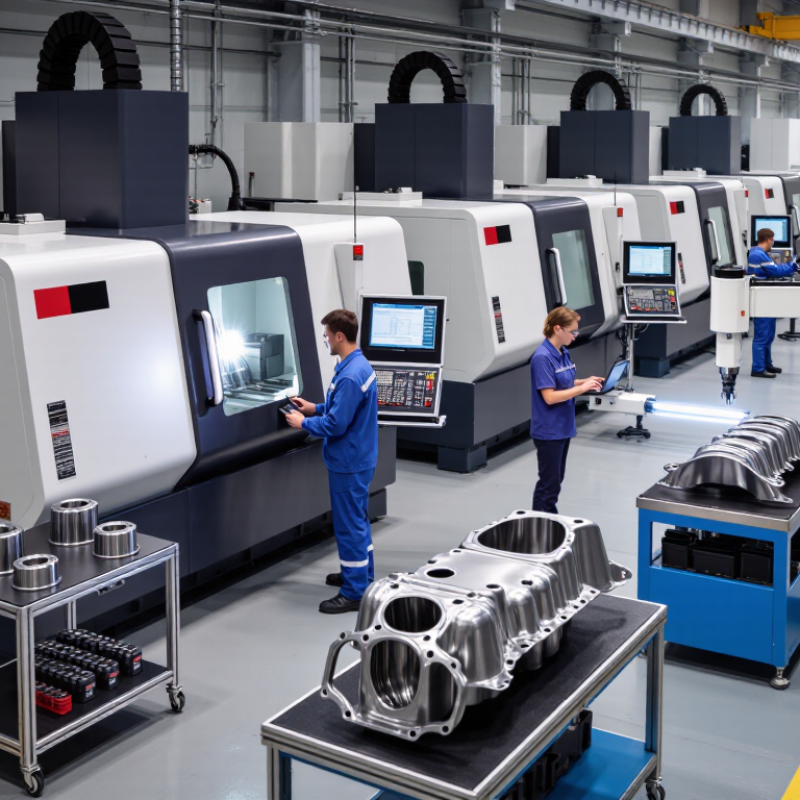
In 2026, a leading CNC machining service is judged by more than machine count. It combines proven shop-floor experience with disciplined engineering decisions. Skilled machinists should understand tool deflection, chip control, heat buildup, and material behavior. That knowledge matters when a thin aluminum wall bends after finishing. A reliable partner reviews drawings before cutting metal. It asks about tolerances, surface finish, loading, and the part’s working environment.
Professional capability appears in measurable details. The service should use calibrated inspection equipment, documented setups, and traceable material certificates. Coordinate measuring machines can verify critical features, while in-process checks catch drift earlier. Clear reports should identify actual measurements, not merely state “approved.” Secure data handling and controlled revision systems also protect production accuracy. Quality systems aligned with recognized international standards add useful structure, but certificates alone prove little.
Strong communication separates a capable supplier from a convenient machine shop. Customers need realistic lead times, cost explanations, and prompt warnings about risk. A mature team may recommend a radius change or wider tolerance when function allows. That advice can reduce scrap without weakening performance. No process is flawless. Even experienced teams miss a warning sometimes; their response reveals their character. A trustworthy service investigates nonconformities and records corrective action. It should also challenge its own assumptions after delivery. Consistent output across prototypes, repeat orders, and global supply chains remains the clearest evidence.
2026 Best CNC Machining Services for Global Industries
Modern CNC machining combines milling, turning, drilling, boring, and multi-axis cutting. Each process suits a different geometry. Milling handles pockets, slots, and complex surfaces. Turning produces accurate shafts, bushings, and cylindrical parts. Five-axis machining reduces setups for aerospace housings and medical components. However, more axes do not automatically create better parts. Tool selection and programming still matter.
Material choice should follow load, temperature, corrosion, and production volume. Aluminum offers low weight and fast machining. Stainless steel provides strength and chemical resistance. Titanium performs well under demanding conditions but requires careful heat control. Brass supports conductive and decorative components. Engineering plastics can reduce friction and overall weight. Surface finishing may include bead blasting, anodizing, polishing, or passivation, depending on the application. I have found that unclear drawings often cause more delays than difficult machining.
Tips: Confirm tolerances, datums, material grades, and inspection requirements before production. Ask for first-article inspection when dimensions affect safety or assembly. Reliable suppliers should provide traceability, calibrated measurement records, and practical design-for-manufacturing feedback. Capable facilities can support automotive, robotics, energy, industrial equipment, and healthcare projects. Still, no process is perfect. A small untested assumption can become a costly revision. Review prototypes under real operating conditions, not only on a screen.
Selecting the best CNC machining service in 2026 requires more than comparing hourly rates. Precision begins with process control, not attractive promises. Request inspection reports, material certificates, machine calibration records, and dimensional data from recent production runs. A capable supplier should explain its tolerances clearly and identify which features require special tooling or inspection methods.
Quality becomes visible in the details. Review how operators manage first-article inspection, in-process checks, surface finish, and final packaging. Ask whether measurement equipment is traceable and whether nonconforming parts receive documented corrective action. Small samples matter. A clean prototype may hide weaknesses that appear during a batch of 5,000 parts. Pilot production can reveal them early.
Production reliability also depends on communication. Confirm realistic lead times, backup capacity, material availability, and approval procedures for engineering changes. Ask for a clear escalation contact when drawings, finishes, or delivery dates change. In practical evaluations, suppliers sometimes report perfect performance while offering little evidence. That deserves reflection. No workshop is flawless. The stronger one admits constraints, records mistakes, and improves its process. A useful assessment may include a paid test order, a drawing review, and a delivery checkpoint. Do not judge reliability from one successful shipment alone. Consistency over several orders provides stronger evidence.
This chart uses the ISO 2768-1 general tolerance classes for linear dimensions from 30 to 120 mm. Lower deviation indicates tighter dimensional control. When evaluating a global CNC machining service, combine tolerance capability with inspection records, material traceability, process control, and on-time delivery performance.
For global CNC machining, the lowest price is rarely the lowest total cost. A useful quote separates material, programming, machining, finishing, inspection, packaging, and freight. Ask for the machine type, tolerance assumptions, and revision policy. A $42 prototype can become $78 after anodizing and export packing.
Lead time needs a written definition. Does it start after drawing approval or payment? Practical suppliers should show each stage: engineering review, material purchasing, machining, inspection, and shipping. For example, a five-day machining promise may still require two weeks for certified aluminum. The 2023 World Bank Logistics Performance Index compares 139 economies, showing major differences in customs, infrastructure, and shipment tracking. Delays are often outside the machine shop.
Supply chain support matters more for recurring orders. UNCTAD’s Review of Maritime Transport reports that ships carry over 80% of global trade by volume. Port congestion, documentation errors, and container shortages can therefore affect a small precision order. Request material certificates, inspection records, backup production capacity, and clear Incoterms. Dual sourcing helps, but it is not automatically safer; two suppliers may depend on the same mill. I have seen attractive quotes fail because a substitute alloy was approved verbally. Keep approvals written. Perfect forecasts do not exist. A realistic supplier should explain uncertainty, not hide it.
Indicative 2026 market benchmarks for international CNC machining projects. Actual quotations vary according to geometry, material, tolerances, surface finish, order volume, inspection requirements, shipping method, and destination.
| Service Category | Typical Materials | Common Tolerance Range | Indicative Machining Rate | Typical Prototype Lead Time | Production Lead Time | Typical Surface Finishes | Supply Chain Support | Best-Fit Global Industries |
|---|---|---|---|---|---|---|---|---|
| 3-Axis CNC Milling | Aluminum, steel, stainless steel, brass, copper, engineering plastics | Approximately ±0.05 mm; tighter tolerances may require additional inspection and process controls | US$45–US$100 per machine hour | 5–10 business days | 3–6 weeks | As-machined Bead blasted Anodized Powder coated | Suitable for standard export packaging, consolidated shipments, batch production, and first-article inspection | Industrial equipment, automation, electronics enclosures, general engineering |
| 4-Axis and 5-Axis CNC Milling | Aluminum alloys, titanium, stainless steel, tool steel, nickel alloys, composites | Approximately ±0.02–±0.05 mm, depending on part size, datum strategy, and inspection method | US$75–US$180 per machine hour | 7–15 business days | 4–8 weeks | Fine machined Anodized Passivated Electroless nickel | Reduces multi-setup risk; supports complex-part inspection, serialized components, and controlled batch release | Aerospace, medical devices, robotics, energy systems, high-performance machinery |
| CNC Turning | Aluminum, stainless steel, carbon steel, brass, bronze, titanium, plastics | Approximately ±0.02–±0.05 mm for standard turned features | US$50–US$120 per machine hour | 5–12 business days | 3–6 weeks | As-turned Polished Passivated Plated | Efficient for repeat orders; supports material heat-lot tracking, bar-stock planning, and scheduled replenishment | Hydraulics, automotive components, instrumentation, pumps, industrial hardware |
| Mill-Turn Machining | Aluminum, stainless steel, alloy steel, titanium, nickel-based alloys | Approximately ±0.02–±0.05 mm, subject to feature size and inspection requirements | US$90–US$200 per machine hour | 8–18 business days | 4–9 weeks | Fine machined Polished Passivated Heat treated | Combines operations in fewer setups; supports part-family production, synchronized delivery, and reduced handling | 航空? |
| CNC Routing for Large Panels | Aluminum sheet, plastics, composite panels, wood-based engineering materials | Approximately ±0.10–±0.30 mm, depending on panel size and material stability | US$40–US$90 per machine hour | 5–12 business days | 3–6 weeks | Edge deburring Protective film Painted Laminated | Supports oversized packaging, flat-pack logistics, nesting optimization, and lower-volume regional stocking | Transportation interiors, construction equipment, industrial displays, electrical cabinets |
| Precision CNC Machining | Tool steel, stainless steel, titanium, ceramics, hard plastics, nickel alloys | Approximately ±0.005–±0.02 mm for selected features with suitable process capability | US$100–US$250 per machine hour | 10–20 business days | 6–12 weeks | Grinding Lapping Polishing Vacuum heat treatment | Requires documented quality plans, controlled inspection records, traceability, and carefully managed change control | Medical equipment, optical systems, laboratory instruments, semiconductor tooling |
| Prototype and Low-Volume Machining | Aluminum, plastics, stainless steel, brass, mild steel, titanium | Approximately ±0.05 mm for standard features; design review may improve manufacturability | US$60–US$160 per machine hour | 3–10 business days | 2–5 weeks | As-machined Anodized Painted Laser marked | Supports engineering change requests, pilot builds, rapid feedback, and small safety-stock quantities | Product development, research equipment, startups, custom machinery |
| High-Volume CNC Production | Aluminum, steel, stainless steel, brass, zinc alloys, engineering plastics | Approximately ±0.03–±0.10 mm, based on process capability and approved control plans | US$30–US$90 per machine hour | 15–30 business days | 8–20 weeks, including tooling and production validation where required | Anodized Zinc plated Black oxide Powder coated | Supports blanket orders, vendor-managed inventory, scheduled releases, capacity planning, and multi-site fulfillment | Automotive, appliances, industrial components, consumer hardware |
| CNC Machining with Secondary Processes | Aluminum, stainless steel, carbon steel, brass, copper, plastics | Approximately ±0.03–±0.10 mm before any process-specific finish allowance | US$55–US$150 per machine hour, excluding outside processing | 8–18 business days | 4–10 weeks | Heat treated Plated Anodized Laser marked | Provides consolidated procurement, outside-process coordination, inspection after finishing, and single-shipment management | Industrial automation, power systems, telecom equipment, commercial machinery |
| Export-Ready CNC Supply Program | Most machinable metals and engineering plastics, subject to destination regulations | Defined by the approved drawing, inspection plan, and documented measurement method | US$50–US$180 per machine hour | 7–20 business days | 4–12 weeks | Customer-specified Protective coating Preservation packing Custom labeling | Includes commercial documentation, export packaging, shipment consolidation, delivery scheduling, and replenishment planning | Global OEMs, distributors, maintenance networks, infrastructure projects |
Benchmark notes: Machining rates are indicative hourly market ranges in U.S. dollars and exclude material, tooling, programming, inspection, finishing, packaging, duties, taxes, and freight unless specifically included in a quotation. International door-to-door delivery commonly adds approximately 3–10 business days for standard air freight and 20–45 days for ocean freight, depending on customs clearance and destination. Critical projects should confirm capacity, Incoterms, quality documentation, material certificates, and delivery milestones before purchase-order release.
A reliable CNC machining partner should understand your industry, not only your drawing. Aerospace, medical, automotive, and industrial projects demand different controls, materials, and documentation. Ask how the supplier manages tight tolerances, surface finishes, and material traceability. A capable team should explain its process clearly, from design review to final inspection.
Tips: Request sample inspection reports, machine capability data, and realistic lead times. Confirm how the supplier handles engineering changes. Ask who checks critical dimensions. Small answers reveal large weaknesses.
Experience matters during production. A skilled machinist may notice tool deflection, thin-wall distortion, or heat buildup before they damage a part. I have seen excellent drawings fail because the supplier ignored clamping conditions. That mistake was preventable. Communication also deserves attention. Can the team respond quickly across time zones? Does it document nonconforming parts honestly? No partner is perfect. However, reliable suppliers admit limits and suggest practical adjustments. Look for controlled processes, trained inspectors, secure data handling, and consistent records. A polished website means little without measurable quality evidence.
It should separate material, programming, machining, finishing, inspection, packaging, and freight. A $42 prototype may reach $78 after anodizing and export packing. Ask about machine type, tolerance assumptions, and revision fees.
Confirm whether lead time starts after drawing approval, payment, or both. A clear schedule includes engineering review, material purchasing, machining, inspection, and shipping. Five machining days may still require two weeks for certified material.
Port congestion, documentation errors, and container shortages can delay small shipments. The machine shop may not control every transport stage. Tracking helps, but it cannot remove every uncertainty.
Request material certificates, inspection records, backup capacity, and written delivery terms. Keep alloy substitutions and technical approvals in writing. Verbal approval is risky.
Not automatically. Two suppliers may depend on the same material mill. Check their upstream sources, available capacity, and emergency plans. Redundancy can look stronger than it is.
Ask whether the team understands your industry’s materials, tolerances, finishes, and documentation needs. Request sample inspection reports and machine capability data. A polished website proves little.
Experienced machinists can notice tool deflection, thin-wall distortion, or heat buildup early. Clamping conditions also matter. Good drawings can still fail.
Confirm the revision process before production begins. Ask who checks critical dimensions and how nonconforming parts are documented. Honest records matter. No process is perfect.
In 2026, the best CNC machining services combine advanced equipment, skilled engineering, consistent quality control, and the flexibility to support both prototypes and high-volume production. A leading provider should offer core processes such as milling, turning, drilling, and multi-axis machining, while working with materials including aluminum, steel, titanium, engineering plastics, and other application-specific alloys. Strong capabilities also include tight tolerances, reliable surface finishes, dimensional inspection, clear documentation, and repeatable production results.
When evaluating a CNC machining partner, manufacturers should consider accuracy, certifications, communication, lead times, pricing transparency, and the ability to manage complex supply chain requirements. The question “which industries rely on CNC machining services” can be answered by examining sectors such as aerospace, automotive, medical technology, electronics, energy, robotics, and industrial equipment. The right partner understands each industry’s technical expectations, production risks, and delivery priorities, providing scalable support from initial design review through final manufacturing.

Nuplanta CNC